
Loudoun County Assessment, Bill, and Payment Fields
Each Loudoun County property tax record sits with its own custodian. The Commissioner's assessment fixes the parcel and its value. That value drives the tax. The Treasurer's account carries the charges and payments. A public spreadsheet suits countywide or monthly review. The account portal is the route to one property's payment history.
| Field | What It Shows | Where |
|---|---|---|
| Assessed value | Annual real-estate assessment used in the tax calculation | Commissioner of the Revenue |
| Land-use value | Reduced taxable assessment for qualifying land, with possible deferred taxes | Commissioner of the Revenue |
| Bill and amount due | Installments, account balance, and current charges | Treasurer account portal |
| Payment history | Payments recorded against a real-estate account | Treasurer portal or monthly public reports |
| Tax rate | Annual rate set by the Board of Supervisors | County tax pages |
The Commissioner's assessment and the Treasurer's bill are related records, not the same one. Virginia assesses real estate at full fair market value. Land-use treatment can still change the taxable amount. A bill then layers on the applicable rate plus any town or district charges.
Loudoun County Assesses at Fair Market Value
Virginia assessment practice rests on 100 percent of fair market value. Loudoun's 2026 notices state a January 1, 2026 value. They reflect market activity from 2025. That figure is a tax measure, not a sale appraisal. The parcel card breaks the total into land and improvement values. Those parts show how the whole is built. Read Loudoun's real-estate assessment information alongside the parcel card when comparing taxable value with a sale or a neighborhood estimate.
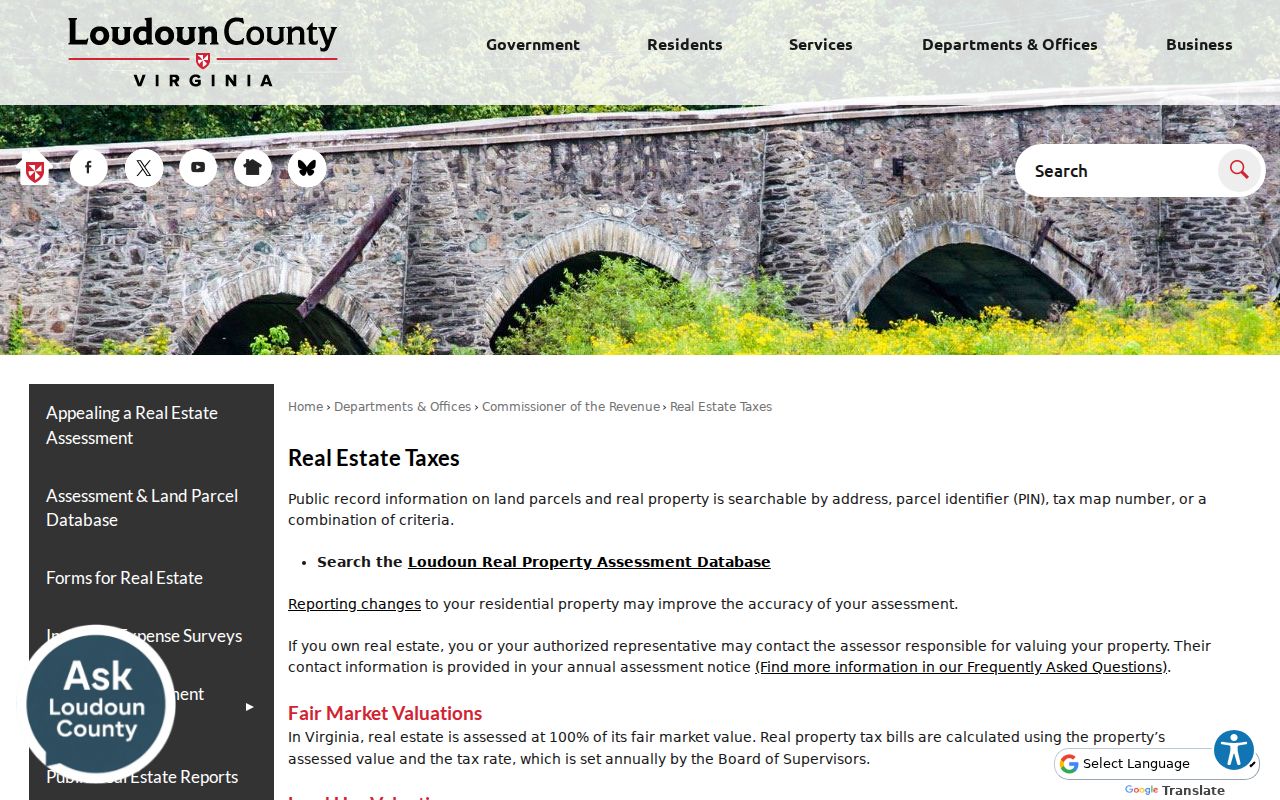
The value page separates a county assessment from a market appraisal. A tax bill still needs the Treasurer's account and rate.
Land-Use Value Can Change the Tax Base
Farmland, forest, or open space may qualify. Horticultural land can qualify too. Under land-use valuation, the taxable assessment can drop below the parcel's full fair-market value. Check the parcel history for a land-use flag. Look for a deferred-tax indicator and past parcel changes too. The difference never vanishes from the record. Deferred taxes can matter when land changes use or a parcel is divided, so review the history before treating the current assessment as the whole tax story. Loudoun's land-use and relief materials govern, not a claim that a property qualifies. For a split or combination in the past 36 months, the assessor advises confirming that taxes and levies are paid. Keep the current PIN beside the prior parcel reference. That pairing keeps the assessment trail intact.
Find a Loudoun County Treasurer Account
Payment history lives with the Treasurer. County instructions allow adding real-estate accounts by account number or by the parcel ID printed on the bill. Public tax-record spreadsheets are another channel. They list parcels and payments by due date. If the portal lacks the item you need, try the public reports or ask the Treasurer which account key applies.
- Find the county real-estate account number or parcel ID on the bill.
- Use that key to add the real-estate account in the Treasurer portal and review the available payment history.
- Compare the bill with the Commissioner’s parcel assessment and any land-use or deferred-tax entries.
- For delinquency or sale status, check the Treasurer’s tax pages and the related court or Clerk record.
- Assessment
- The Commissioner’s value for the real-estate roll.
- Tax bill
- The Treasurer’s amount due after rates and charges are applied.
- Land-use valuation
- A qualifying-use assessment that may reduce taxable value.
- Deferred tax
- A recorded amount to review when land-use status or parcel configuration changes.
Account number and parcel ID are the search keys. The county's payment-history instructions show the match. Then the Loudoun County Treasurer tax portal opens the tax-record and payment links.
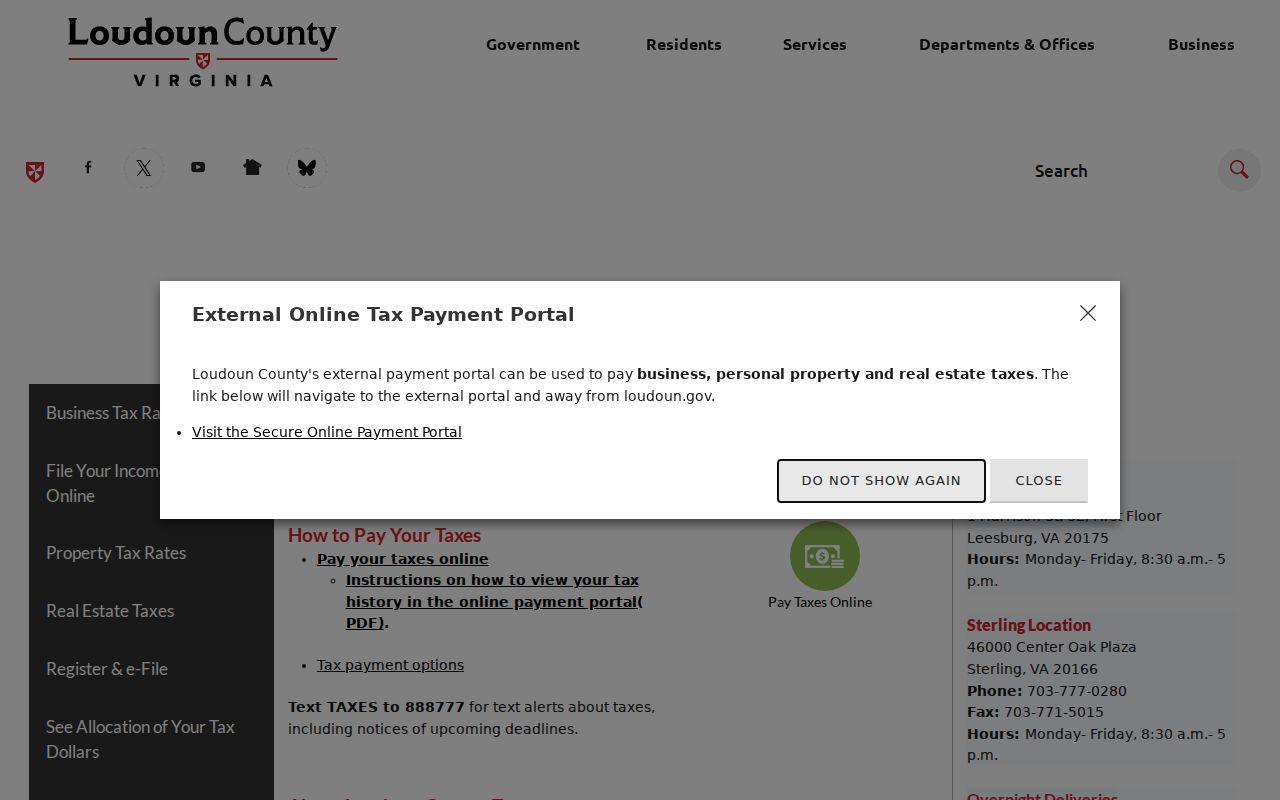
The Treasurer portal covers bills and payments. Assessed value and ownership stay on the Commissioner's record.
Loudoun County Bills Have Two Due Dates
Real-estate bills are generally mailed in early May. Two installments follow: June 5 and December 5. The Board of Supervisors sets the tax rate each year, usually in April. The published 2025 regular district rate was $0.805 per $100 of assessed value. A later bill belongs to its own tax year and district, so check it there. The due date tells when payment is expected. It does not show whether the account is current. Payment history or a public report shows recorded payments and what remains. Verify any delinquency with the Treasurer before acting on it. County collection covers most incorporated towns. A single payment uses the county real-estate account number, Loudoun says. Collection arrangements have changed over time. The current county tax page governs any particular bill. Keep three figures separate: assessed amount, tax rate, and amount due. A higher assessment alone says nothing. It does not reveal the installment balance, payment credits, or town charge. Match the bill's account number or parcel ID to the Treasurer history first. Then estimate what remains due.
Town Charges May Share the County Bill
Loudoun County handles billing and collection for most of its incorporated towns. Because of that, town charges often ride along on the county real estate account. A single payment can settle both. That arrangement makes town status worth confirming. The bill follows the town boundary layer. It does not follow the mailing address.
A property in Loudoun can straddle a town line. The assessment database may list unit suffixes like -001 and -002. WebLogis maps only the parent parcel. A bill may seem to cover only part of a mapped holding. That is a clue, not an error. Compare the account, the PIN units, the legal description, and any recorded annexation instrument.
Similar addresses do not guarantee the same taxing body or payment route. The Treasurer's current page settles the question. So does the account number printed on the bill itself.
Review or Appeal a Loudoun County Assessment
Loudoun gives owners two paths to contest a value. One is an administrative review with the Commissioner. The other is a separate appeal to the Board of Equalization. In the county's 2026 notice cycle, March 16 marked the review deadline. June 1 marked the BOE deadline. Those dates have passed. Rely on the current notice and assessment page for the next cycle's deadlines and filing steps.
Good evidence ties the parcel's physical facts or market comparisons to the value in dispute. The county's appeal materials spell out what it accepts and how each step proceeds. A tax bill cannot stand in for the assessment notice. A sale price alone rarely proves the assessment record wrong, either.
The county's assessment appeal page posts the current review and BOE route.

Note: Read the assessment notice, the evidence, and the deadline together, and never lean on a prior year's calendar.
Appeal window. For the 2026 notice cycle, administrative review closed March 16 and the Board of Equalization appeal closed June 1. Check the current notice for the next cycle.
Loudoun County Notices Are Not Tax Bills
Loudoun County announced its 2026 assessments on February 3, 2026. Each notice stated a January 1, 2026 value drawn from 2025 market activity. The county stressed one point: the assessment notice is not a tax bill. The Treasurer's bill arrives later. The assessment and the rate combine to set what is due.
That distinction clears up a common mix-up. A notice reports the assessed value and the review path. A bill reports the installment amount and its due date. Payment history shows whether the account is current. Each record answers a different question.
Start any notice review with the parcel identifier and its description. Then examine the land and improvement values. Look for any land use indication and the appeal instructions for that assessment year. None of those fields belongs to the tax bill. Do not treat the two documents as interchangeable.
Delinquent Tax Records Lead to Sale Files
Loudoun County can pursue a judicial sale of land. It does this when property taxes go unpaid long enough. The authority comes from Virginia Code §58.1-3965. Before any sale, the county advertises the property in Loudoun Now for four straight weeks. An owner can still stop the process. Redeeming the parcel means paying the taxes, plus penalties, interest, costs, and fees. The sale page spells out registration steps. It also covers deposit rules and buyer-certification requirements that bidders must meet.
Tax-sale parcels move as-is. The county pushes buyers to run their own title investigation before bidding. Judicial sales need Circuit Court approval, while nonjudicial ones rest with the Treasurer. Whoever wins pays the recording costs and receives a special warranty deed. Excess proceeds sit with the Circuit Clerk. The deed records trail through the same court file.
Review the Loudoun County tax-sale records alongside the Treasurer account and the related court file.
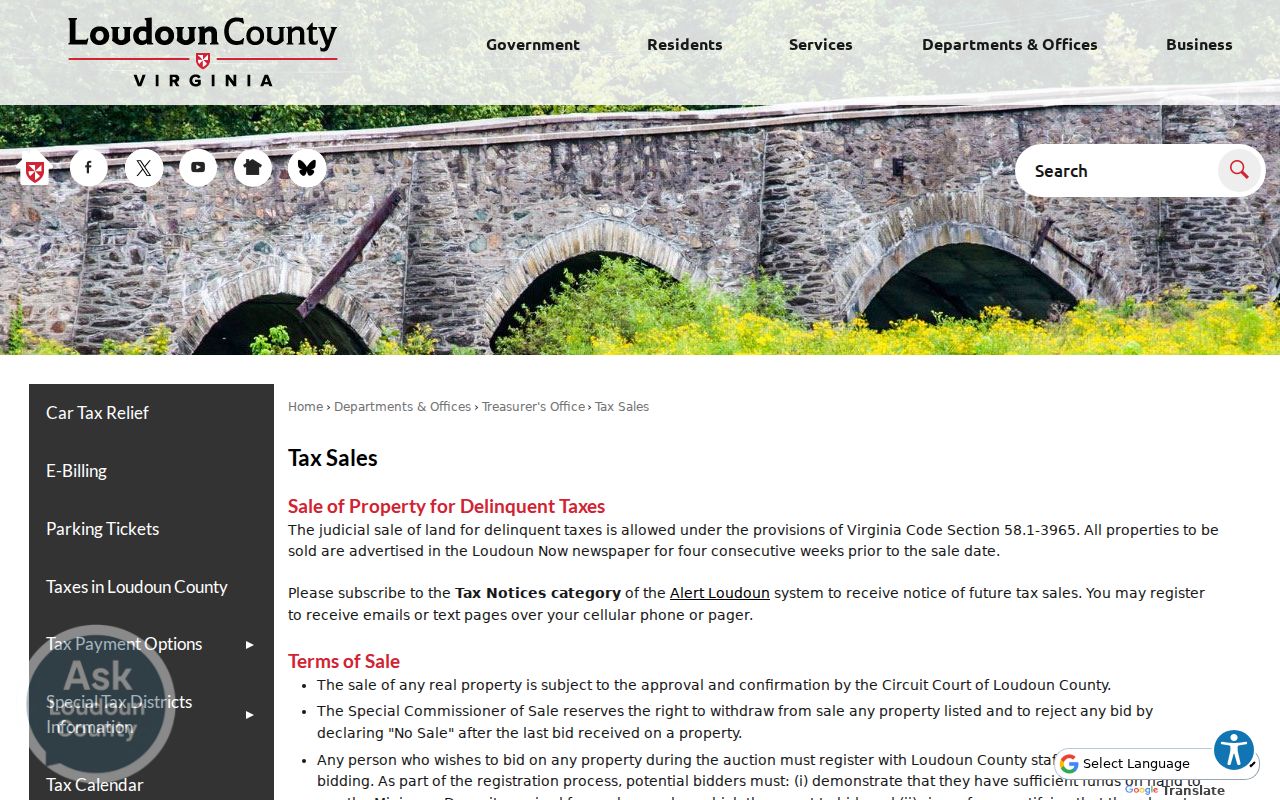
Note: Trace a sale by keeping the notice, court approval, tax account, and later deed records together.