
Trace Former Owners Backward by Deed
Each deed is a link in a chain. Start with the newest transfer. That deed's grantor is your next grantee. The county index points the way, but every step back must match the same parcel's legal description and record reference before you trust it. This sequence builds the chain without assuming any owner or transfer date.
| Transfer step | Grantor to grantee | Instrument to inspect | Reference to carry back |
|---|---|---|---|
| Newest deed | Current grantee ← prior grantor | Recorded conveyance | Legal description, recording date, book/page or instrument number |
| Prior acquisition | Prior grantor ← earlier grantor | Earlier deed found by prior grantee | Same land description and parcel context |
| Historic period | Earlier named parties in the index | Historic deed-book entry | Name spelling, date band, and deed-book reference |
| Plat connection | Subdivision or adjoining-owner context | Recorded plat or deed reference | Lot, block, easement, or metes-and-bounds call |
Each arrow runs from one deed's grantee to the prior deed's grantor. That is the pattern. It is not a promise that every parcel has a clean sale-by-sale chain.
Anchor Loudoun County History to the Newest Deed
Find the newest deed describing the parcel first. Write down both parties, the date, the instrument type, the legal description, and the book/page or instrument number. The prior owner is the grantor. Search that name as a grantee to reach the next transfer back. Watch for similar names on other tracts. That deed is not part of your chain.
The Clerk's Public Access entry screen is the remote starting point for the name index. Open the Loudoun County land-record index to locate the newest deed before tracing earlier owners.
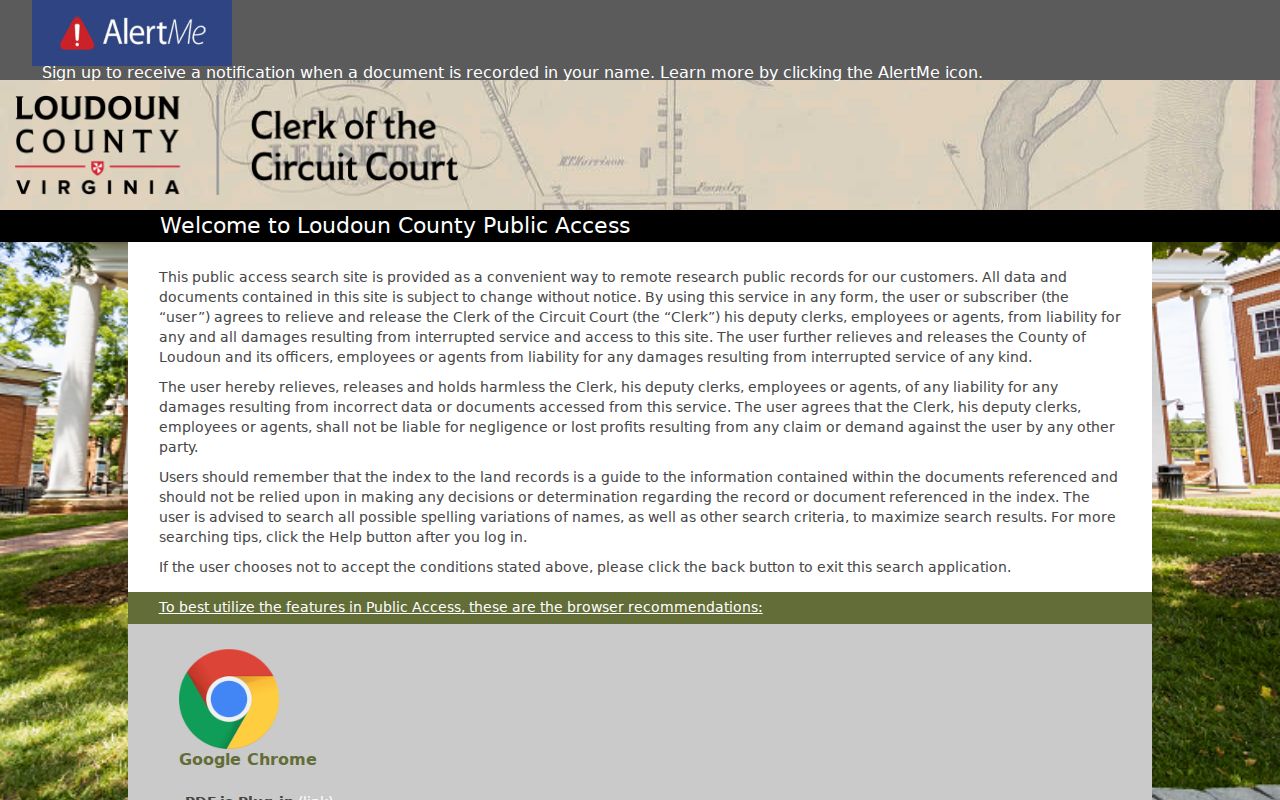
Once the first result appears, test every older entry against its legal description and recording details.
Walk the Loudoun County Chain One Grantor Back
A grantor conveys an interest. A grantee receives it. To search in reverse, take the prior grantor from the deed and find that person as a grantee in an earlier conveyance. Pair the legal description with the name. A common surname can otherwise pull in the wrong parcel, so note every instrument reference and date as you move farther back.
- Match the newest deed to the parcel using the legal description and PIN.
- Search the named grantor as an earlier grantee and compare the older deed’s land description.
- Repeat with the next prior grantor; try spelling variants, initials, and different name order.
- When the remote index no longer covers the needed period, use the historic PDF ranges and deed books.
- Grantor
- The party conveying an interest in a deed.
- Grantee
- The party receiving the interest.
- Chain of title
- The linked record of conveyances affecting a parcel.
- Legal description
- The deed’s written land description, which can outlast a street-address change.
Where Loudoun County Past Owners Appear
Loudoun's land-record research reaches back to 1757. That depth is real. Still, the remote index and historic references are not the same as complete image access for every year. When a chain passes beyond the online material, the era guide points to the next record source.
| Source | Coverage | Where held | What it adds |
|---|---|---|---|
| Current land-record system | 1757-present research; image availability varies | Clerk Public Access and counter | Index entries and current instrument references |
| Historic deed indexes | Six ranges through 1903 | County deed-index PDFs | Name and date leads to deed books |
| Partially proven wills and deeds | Historic instruments not entered into court records | Clerk historic records page | Additional estate and land-transfer leads |
| Plat Reference Index | Most deed-book plats, 1757 to mid-1945 | Clerk historic records page | Subdivision map references, not a complete list |
Six bands run from 1757 to 1903. The ranges are 1757-1812, 1813-1833, 1833-1857, 1857-1878, 1878-1893, and 1893-1903. A miss is not proof. Treat it as a prompt to check spelling and adjacent record types.
Use Loudoun County Historic Index PDFs
When a name chain passes the modern index, the historic PDFs open the earlier deed books. Pick the right date band. Search both grantor and grantee. Try initials, spelling variants, and likely name order too. An index hit is only a lead until the deed book confirms the property description and transfer terms.
The county's deed page collects these tools. Use the Loudoun County historic deeds and plat index to identify the relevant book reference.
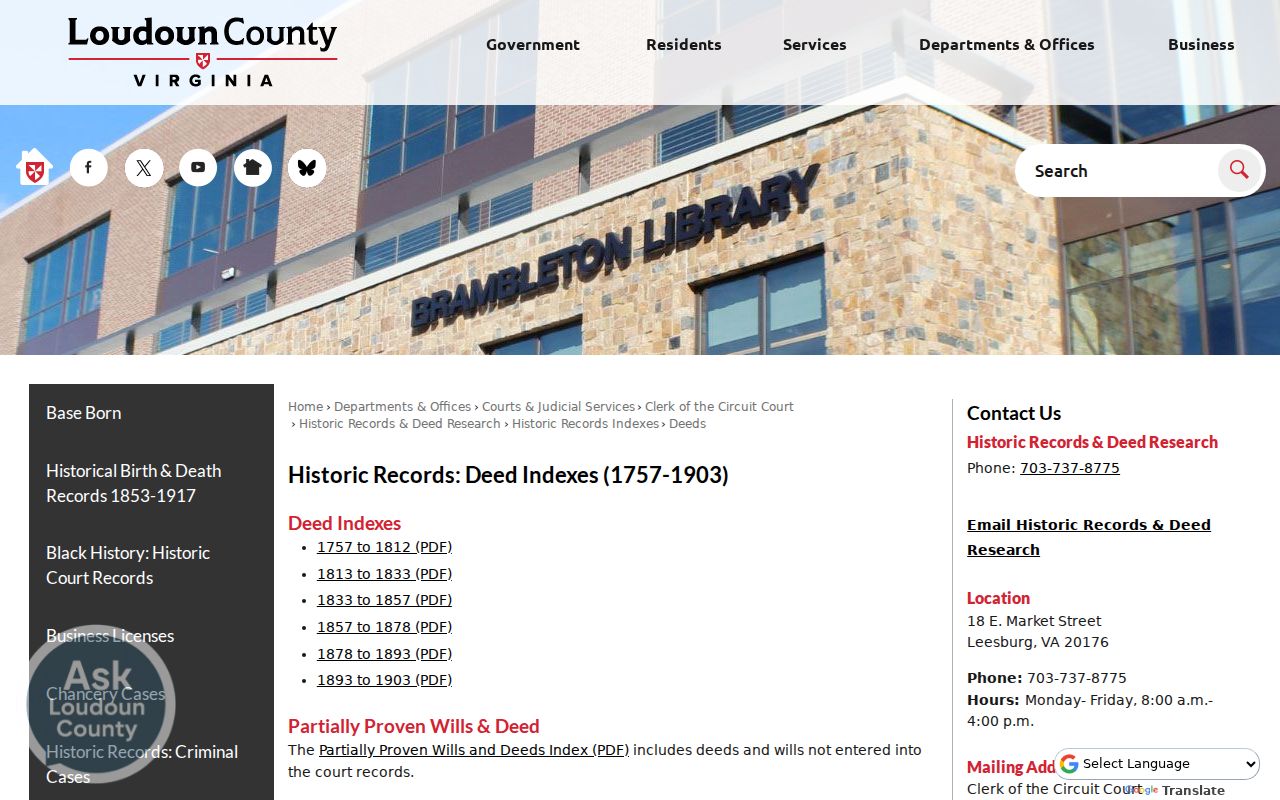
The source is an index and finding aid. It makes no claim that every historic deed image can be downloaded remotely.
Probate Can Break a Loudoun County Name Chain
A chain sometimes ends at a deceased owner. The last deed names no one earlier. The estate file usually explains the next step. A will, an executor qualification, a sale approval, a commissioner's deed, or a deed of distribution can connect the decedent to a later grantee. Search the Circuit Court Clerk's probate records by estate name, then return to land records for the recorded conveyance.
Virginia vital-record certificates are separate from probate files, and a death certificate stays restricted before its statutory opening period. Case status may appear online. The probate documents themselves may require Clerk assistance. For transfers, rely on the estate file and deed.
For family and house history, library newspapers and genealogy collections add context. They never replace the deed. Loudoun County Public Library lists branch-only Ancestry Library Edition, HeritageQuest, Civil War Era newspapers from 1840 through 1865, and a Washington Post archive running from 1851 through 2001.
Plats Help Trace Loudoun County Land Changes
A plat shows how a tract became a subdivision. It marks where lots were laid out and which easements or dedications were recorded. Newer Loudoun deeds may cite lot and block. Rural property descriptions lean instead on acreage, roads, streams, and adjoining owners. A later deed may only point to a plat by name or reference. Read the original map itself.
The county's Plat Reference Index covers most plats in deed books from 1757 to the middle of 1945. It is explicitly not all-inclusive, though. A missing entry does not mean a missing plat. Check the deed book and the parcel history. WebLogis subdivision layers can help you find the right map.
Parcel numbers can change when land is divided or combined. Keep the legal description beside the current PIN. The earlier deed reference belongs there too. The search never stops at a modern parcel boundary.
Access Loudoun County Books and Copies
Visitors can work from the free public kiosk at 18 East Market Street in Leesburg, available weekdays from 8 a.m. to 4 p.m. Remote indexing is free once you register. Images cost 50 cents per page. A convenience fee also applies. It is the greater of $2 or 4 percent. For heavy users, an annual subscription runs $262 and unlocks unlimited index and image access after approval.
Paper copies work differently. Request them by mail or pick them up at the Clerk's office, and include the instrument reference, page count, paper size, and certification choice. Copies run 50 cents per letter or legal page and $1 per 11-by-17 page, with certification adding $2 per document. The county lays out the kiosk and remote options on its land-record remote-access page.
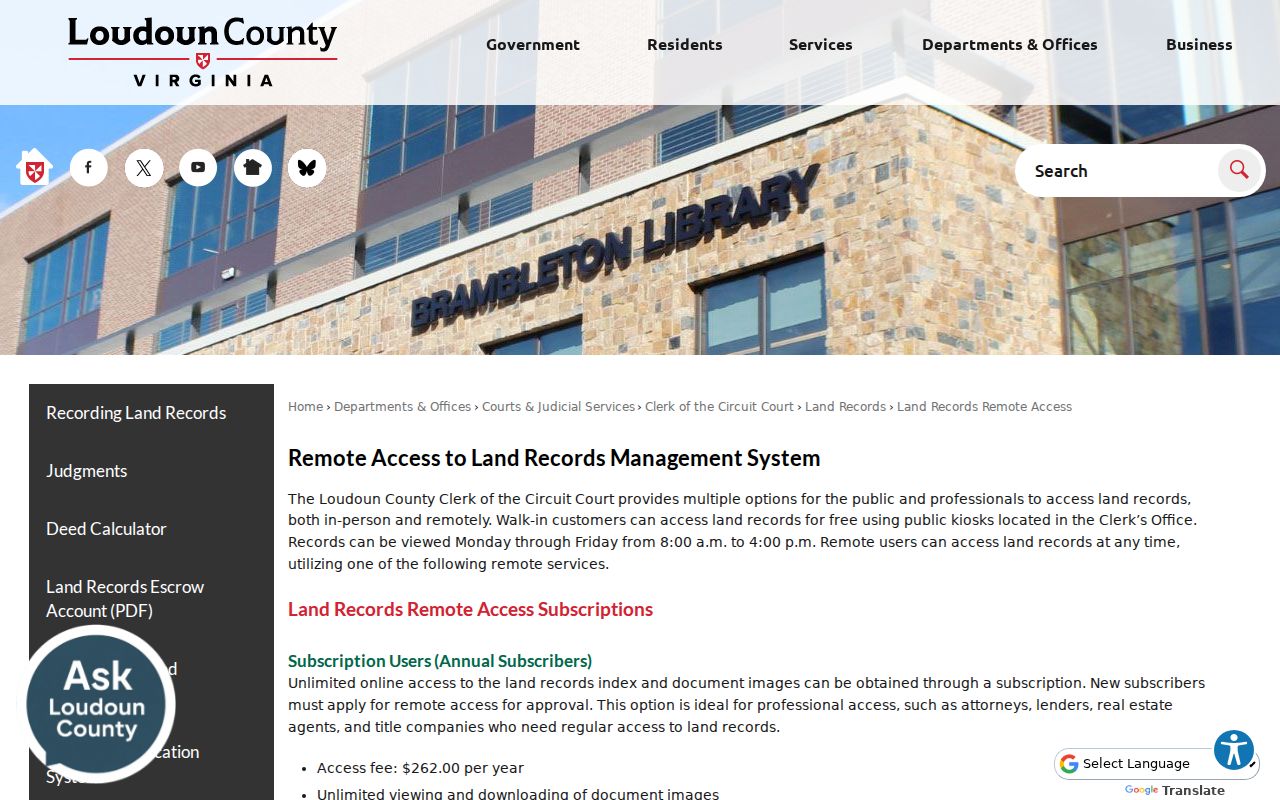
A clear reference and a specific copy request will get you further than asking staff to rebuild a chain of title. Historic Records staff can help track down references, though they cannot perform legal research.
Limits of Loudoun County Ownership History
Local records begin in 1757. The historic indexes run through 1903. The Clerk's Plat Reference Index reaches into 1945, though it is not complete. The county publishes no courthouse-fire loss and no comprehensive street-renumbering history. Assume neither when a search hits a gap.
Work around gaps creatively. Try alternate spellings, initials, and reversed name order. Check adjacent index ranges and the partially proven wills and deeds index. For older parcels, lean on the legal description, adjoining-owner calls, roads, streams, and plat references instead of a current street address alone.
House history and lawful use. Trace past ownership for property history, estate research, or due diligence. Do not use a former owner’s record to track, harass, or harm a living person.